
If you’ve heard the term ‘metabolism’, it was probably used in reference to weight gain (or the inability to put on weight). While there is some genetic truth to having a “fast” or “slow” metabolism, there’s much more than genetics that goes into metabolic health.
And the truth is, metabolism does more than help you lose or gain weight. Understanding its role in your metabolic and cardiovascular health is the first step toward keeping yourself healthy and your body working better.
Quick Links:
- What Is Metabolic Health?
- What Are the Main Markers of Metabolic Health?
- Why Metabolic Health Matters Even If You Feel Fine
- Signs Your Metabolic Health May Need Attention
- What Affects Metabolic Health?
- How to Improve Metabolic Health
- How Naturopathic Care Can Support Metabolic Health
What Is Metabolic Health?
Metabolic health largely refers to your body’s ability to process and use energy from food. However, your metabolism also includes the management of blood sugar, blood pressure, cholesterol, and triglycerides, as well as a healthy amount and distribution of body fat.
Many people believe metabolism is just about weight, or how quickly one’s body burns calories, but it’s actually a reflection of how several systems are working together. Metabolism is influenced by nutrition, movement, muscle mass, stress, sleep, hormones, medications, genetics, and, potentially, other health conditions.
Metabolism is not, however, just about these “inputs.” Your metabolic markers, including blood pressure and cholesterol, provide valuable information. They can be an indicator of health risks such as diabetes, heart disease, or stroke. It’s one reason why labs, blood work, and monitoring these metabolic markers are part of routine care.
 What Are the Main Markers of Metabolic Health?
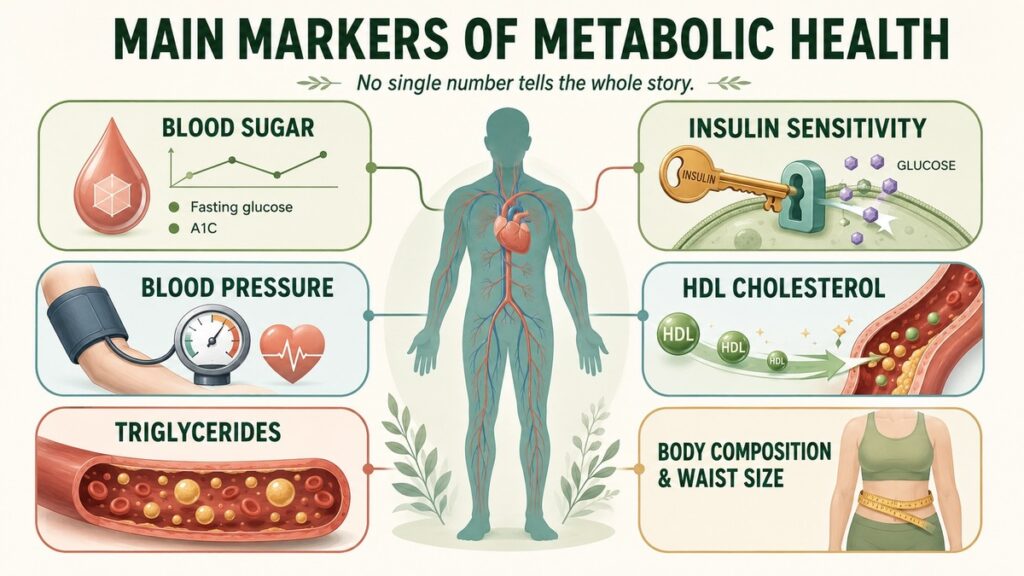
When most people talk about metabolism, they’re often referring to weight, but there is no single indicator of metabolic health. In fact, it often takes looking at several metabolic markers to determine how effectively your body is managing blood sugar, fat, and cardiovascular needs.
So what are those metabolic markers?
- Blood sugar: Both your fasting glucose and A1C levels reveal how well your body is managing glucose.
- Insulin sensitivity: Your sensitivity to insulin, determined through bloodwork and potentially additional testing, reflects how your body responds to insulin, produces it, and absorbs glucose from the bloodstream.
- Blood pressure: Your blood pressure measures the work your heart must do to circulate blood throughout your body. As a metabolic marker, high blood pressure can indicate both metabolic and cardiovascular strain.
- Triglycerides: Triglycerides are fats, and high levels in your bloodstream suggest the body is not processing or storing energy as effectively as it should.
- HDL cholesterol- HDL is often referred to as the “good cholesterol,” and higher levels suggest better cardiovascular health.
- Body composition and waist size- How and where the body manages and stores fat is as important as how much it stores. Abdominal fat is typically associated with both insulin resistance and increased metabolic and cardiovascular risk.
In addition to these markers, your doctor may also look at family history, LDL cholesterol, liver function, and inflammation. It’s one reason routine care is essential. Tracking these numbers and their trends over time can help doctors and patients proactively avoid health risks. They’re a far better indicator of metabolic health than the number on the scale.
Why Metabolic Health Matters Even If You Feel Fine
One reason routine care, including tracking your metabolic health with your doctor, is essential is that you may feel fine even as changes in your blood pressure, blood sugar, or cholesterol silently develop. In fact, many indicators of a metabolic or cardiovascular issue have no initial signs or symptoms.
However, if you’re not monitoring these numbers, those increases can raise the risk of:
- Type 2 diabetes (often insulin resistance begins years before blood sugar levels trigger concern)
- Heart disease and stroke
- Fatty liver disease
- Kidney disease
- Cardiac or metabolic complications
Routine exams, blood pressure checks, and regular blood work can help you and your care team discover patterns that aren’t yet impacting how you feel or look. You may feel fine, the number on the scale may be stable, but behind the scenes, metabolic markers tell a very different story.
Your and your doctor’s ability to identify those changes means you have an opportunity to proactively improve blood sugar, blood pressure, and other concerns before they become more urgent health concerns.
Signs Your Metabolic Health May Need Attention
While metabolic markers are best measured through labs and blood work, that doesn’t mean there are no signs of metabolic concern. However, many of the symptoms may be subtle, and in many cases we attribute them to other lifestyle factors like stress, a busy or overcommitted schedule, or even aging.
That said, it’s worth talking to your doctor if you’re noticing:
- Chronic fatigue or low energy
- Increased hunger, thirst, or urination
- Irritability between meals
- Energy crashes
- Brain fog or an inability to concentrate
- Unexplained weight gain focused particularly around the abdomen
- Difficulty losing that weight despite efforts, including nutrition and increased activity
- Blurred vision
- Frequent infections or slow wound healing
- Dark, thick, or velvety skin in neck, underarms, or groin
- Changes in routine lab work from blood pressure to cholesterol
- Menstrual changes
While age, stress, or even just a full calendar can contribute to some of those symptoms, if they’re prolonged or do not change with other lifestyle changes, talk to your doctor. Again, regular routine care can help you talk about even minor health changes with your doctor, so you catch potential problems early, when intervention is most effective.
While many metabolic concerns are “silent,” that doesn’t mean they’re not concerning. Any of these symptoms may be worth discussing with your doctor, and that goes doubly for patients who have a family history of cardiovascular disease or diabetes.
 What Affects Metabolic Health?
We’ve looked at what numbers indicate issues or concerns with metabolic health. That’s the output. But what can you do to support metabolic health? What’s the input that, ultimately, affects metabolic health?
Let’s start with this: it’s more than food or weight. While nutrition plays a role, so does your activity level, sleep health, stress, hormones, medications, genetics, and any existing health conditions. Any one of these, or any of them in combination, can impact the way your body not only uses energy but also regulates blood sugar and pressure. Let’s break it down.
Nutrition and Blood Sugar
When it comes to nutrition and blood sugar management, many folks believe that if they avoid added sugars, candy, treats, and desserts, they’ll do just fine. This ignores the fact that carbohydrates also break down into sugar in your bloodstream, and the type of carb, what it’s paired with, and how much you eat can all impact how quickly your blood sugar rises.
You want to keep your blood sugar levels steady and balanced, rather than causing spikes and crashes. Spikes force your pancreas to work overtime and increase insulin resistance, whereas crashes result in fatigue and low energy.
So, instead of just cutting sugar, meals should include a mix of protein, fiber, and healthy fats to keep blood sugar steady. For those who experience hunger, irritability, or energy crashes between meals, small, more frequent meals may be helpful, but there is no single diet that will work for everyone, let alone everyone with metabolic concerns.
Diet and nutrition depend largely on your activity level, current health and health goals, medications, and your body’s response to your diet.
Activity Level and Muscle Mass
When you look at the body, you see that it has many muscles and joints. These are all designed to move. Moving the body is a way to honor its design and a sure way to help it stay healthy.
When you exercise or move your body, even gently, your muscles use glucose for energy. That means your muscles are a vital part of how your body regulates blood sugar.
Strength training, whether you choose weights or resistance bands, builds and preserves muscle mass, and those muscles use and store glucose. During exercise, your muscles contract and take up glucose from the bloodstream, which can improve insulin sensitivity.
On the other hand, aerobic exercise asks your muscles to use more energy (or sugars) to perform. In turn, they take even more glucose from your bloodstream, using both stored glucose and fat as fuel. This is why what you eat pre-workout also impacts performance. For example, many endurance runners carry quick sugars, even candy, to give the body and the muscles something to use quickly rather than relying on what’s stored.
And, perhaps most importantly, the activity you choose need not be endurance running. Walking, cycling, and swimming are all aerobic activities that are easier on the joints than, say, a boot camp class, and yet all still will make demands on your body that help contribute to stabilized blood sugars.
 Sleep and Circadian Rhythm
“To sleep, perchance to dream,” and perhaps more importantly, to rest, recover, and allow your body’s systems to restore and reset. There is no medication on the face of the earth, no herb or nutrient that can give your body the healing, restorative power that quality sleep can offer. This includes allowing your body to regulate the hormones that control appetite, stress, and blood sugar.
That said, when you sleep matters. There’s a reason that interrupted sleep, irregular schedules, and shift work all throw you off. It’s because your body has an internal clock, a circadian rhythm, that not only helps your body know when it’s time to sleep (darkness), but it also plays an important role in digestion, glucose metabolism, and hormone release. Good sleep hygiene, including a regular bedtime, no screens, getting natural light after waking up, and more, can help ensure that your sleep cycle supports your metabolic health.
Stress
What doesn’t stress impact? When it comes to metabolic health, stress is working on two fronts. Sure, you may notice when stress affects your appetite and sleep schedule, compounding the metabolic concerns associated with those, but more quietly, stress is doing something else; it’s causing hormones like cortisol to produce even more glucose.
Cortisol spikes your blood sugar so your body can effectively respond to a perceived threat. In short-term stressful situations, this is often necessary and helpful, but when stress is chronic or prolonged, your body struggles to regulate both blood sugar and blood pressure.
Hormones and Life Stages
While you might be able to manage your nutrition and activity level, reduce your stress, and build better sleep habits, one thing you may not have as much say over is hormone levels.
Whether it’s a medical condition such as PCOS or a thyroid disorder, or a life stage such as puberty or pregnancy, hormonal swings and changes can have an impact on metabolic markers.
Because hormones affect a pregnant woman differently than they affect a menopausal woman, metabolic care is highly individualized and can’t be overgeneralized or simplified to “eat better and move more.”
Again, this is where routine care and conversations with a doctor can help you track hormonal changes and determine whether they may be impacting your metabolism, or if it’s time to dig deeper.
Medications, Genetics, and Health Conditions
Your genetics lay out a road map and influence how your body stores fat, responds to insulin, and regulates blood pressure. For example, a family history of high cholesterol or type 2 diabetes may necessitate monitoring more closely, but it’s not a given that those conditions will develop simply because there’s a genetic risk.
In addition to genetics, certain medications, including corticosteroids, antidepressants (SSRIs), and even allergy pills, can affect your appetite, weight, blood pressure, blood sugar, and cholesterol. If you’re taking one of these medications, discuss your metabolic concerns with the prescribing doctor, who can help you evaluate your needs and options, as well as other potential causes of metabolic concerns.
Other health concerns, including sleep apnea, Polycystic Ovary Syndrome (PCOS), thyroid disease, and liver disease, can also cause metabolic changes.
As it’s clear, there are any number of factors that may be impacting your metabolic health, and determining whether it’s metabolic or another issue is essential to ensuring the right health outcomes. This is what makes naturopathic care so invaluable. Naturopathic doctors evaluate your health history, medications, health changes, symptoms, labs, and more, with time for updates, discussion, and questions during each routine visit.
This means NDs are looking at the system rather than evaluating symptoms in isolation. Not every abnormal metabolic marker is a result of your lifestyle or habits. Looking for the connections means you and your care team may be able to identify potential concerns and interventions before symptoms become a condition.
How to Improve Metabolic Health
As always, proactive preventive care is essential, but so is taking ownership of one’s health and taking steps to course-correct when concerns arise. For many, the big fear is that changes will require a major overhaul, but improving your metabolic health doesn’t require extreme measures.
Truth be told, with a few small, consistent changes, many people can improve how their bodies manage blood sugar, blood pressure, and cholesterol. Where you start will, of course, depend on where you are, so discuss with your healthcare provider (or connect with us for a consultation) what the best course of action is for you.
Steps to improve metabolic health:
Know your numbers. It’s hard to know what you need to do if you don’t know where you are. In this case, that means staying on top of routine checks, including blood pressure and bloodwork.
Balance your diet. Balance macronutrients (carbohydrates, protein, fats) in your meals and be mindful of fiber. All of these will work to slow digestion and support more stable blood sugar levels.
 Be active every day. Again, we’re not suggesting you sign up for a marathon, but work aerobic activities into your day– walking, swimming, cycling (and yes, your dog walk counts!). If you work at a desk or are largely sedentary, research suggests even small movement breaks are beneficial. Park farther from the store. Take the stairs. Do some push-ups (or wall push-ups) while you wait.
Incorporate strength training. Muscle matters. It’s not just essential for helping you stay active; it also helps your body use and store glucose more effectively. Whether you add bodyweight exercises and resistance bands or a full-on gym membership, building and maintaining muscle mass is essential.
Develop good sleep hygiene. Consistent, quality sleep is essential for your body to reset and restore itself. If you wake up feeling tired or with a headache, or feel tired all day, it may be time to talk to your doctor about sleep.
Find ways to reduce stress. A walk in the park, exercise, a meditation practice, time with friends or family, a new hobby, or therapy are all great ways for you to reduce the impacts of a stressful job or time in your life.
 Quit or reduce habits that negatively affect your health. Tobacco use and drinking alcohol both affect cardiovascular and metabolic health. If you can’t quit immediately, cutting down on alcohol and cigarettes significantly can still offer benefits as you work to quit.
Review medications with your doctor. If you’re concerned you’re experiencing metabolic effects associated with a condition or medication, talk to your doctor. Don’t stop a medication on your own; instead, talk to your doctor, who may have other options or interventions for you to try.
Work with your care team to track trends. Numbers rarely speak for themselves. Track trends instead. While you may notice changes in blood pressure, energy, or weight, there are so many variables to investigate. Monitoring trends over time can reveal far more information than a snapshot.
It’s rare that metabolic markers change overnight, so expecting them to improve overnight is also unrealistic. Work with your doctor to identify which change is most likely to benefit your health, and then build habits that support those changes.
How Naturopathic Care Can Support Metabolic Health
There is no single metabolic marker that provides a complete picture of metabolic health. Instead, there must be an understanding of health history, nutrition, movement, sleep, stress, hormones, medications, and more. When was the last time you discussed all of those with your doctor in a single visit?
At the very core of naturopathic care is time. Time to ask questions, understand test results, explore daily habits, and discuss, with your doctor, a plan– one that works with your lifestyle– to achieve your health goals.
Instead of looking at one test result, one abnormal or high number, or any symptom in isolation, your naturopathic doctor will look at history, patterns, and trends across multiple metabolic markers, conditions, and medications to understand what’s at the root of your health concerns.
Because many metabolic changes develop without obvious symptoms, routine care is essential. Regular appointments allow your care team to establish baseline measurements, monitor them over time, identify trends, and adjust your healthcare plan as your needs evolve.
A Canby Clinic membership makes it easy for you to make those routine appointments. One monthly charge, like a gym membership, means you get regular visits and ongoing communication to monitor your metabolism and other health concerns.
Naturopathic care is preventive and proactive. We work to keep you healthy rather than stepping in only after you’ve gotten sick. It’s not just health care; it’s healthy care.
Ready to talk to our team about membership? Want to schedule a free 15-minute consultation? Reach out today!