
We’ve all had it happen. Stress, excitement, worry, and our stomachs seem to be feeling it too. We can call it a nervous stomach, but that only hints at the real communication between your brain and your body.
The mind-gut connection is increasingly drawing researchers’ attention as we learn how our gut microbiome (the millions of bacteria, fungi, and microorganisms that live in our guts and help us digest food and release vital nutrients) might affect much more than digestion.
But what is the mind gut connection? How does it work? And how does it impact how we feel, physically and emotionally?
Quick Links:
- What Is the Mind-Gut Connection?
- How Does the Brain Communicate With the Digestive System?
- How Digestion Can Affect Mood
- How Stress and Mood Can Affect Digestion
- Supporting the Mind-Gut Connection Starts With the Foundations
- Can Digestive Supplements Support the Gut-Brain Connection?
- When Digestive or Mood Symptoms Need More Support
- Supporting Digestion Means Looking at the Whole Person
What Is the Mind-Gut Connection?
Even if you’ve never heard the term, we bet you’ve felt the connection. Butterflies before a big event or date? Stress/anxiety that shows up in digestion? Nervous about a discussion, like asking for a raise, makes you a little nauseous? That’s the mind-gut connection.
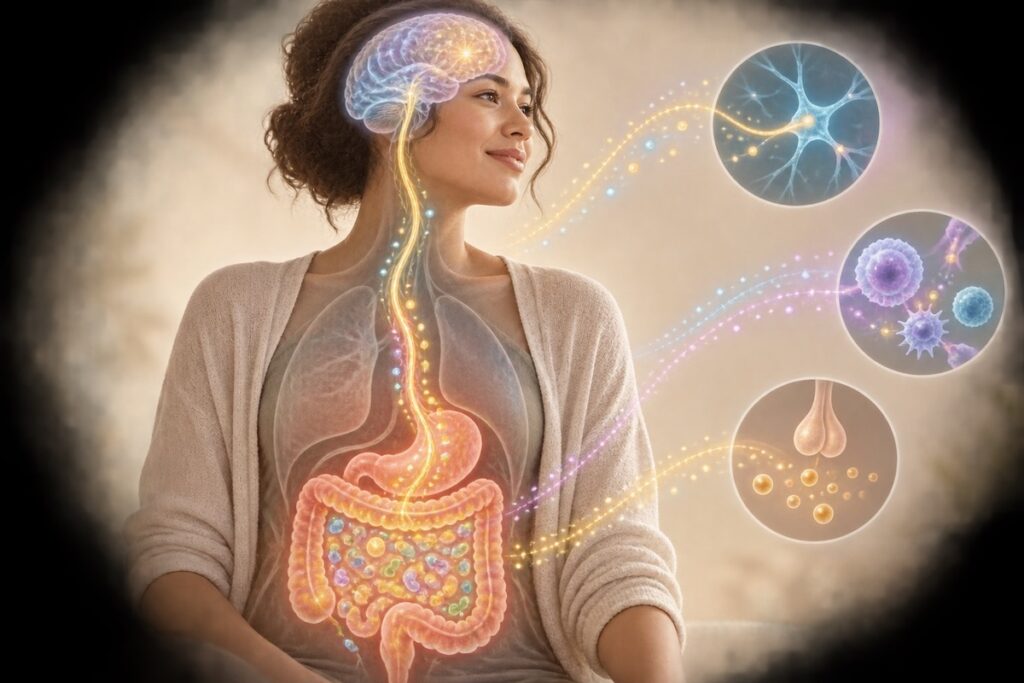
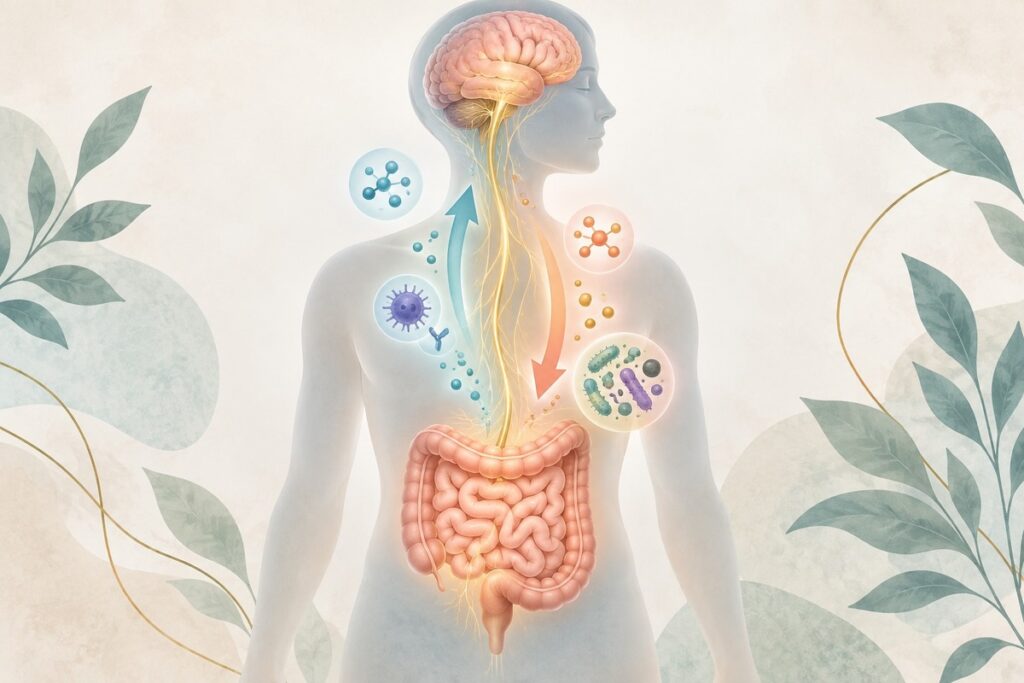
More clinically, it’s called the gut-brain axis, and it’s an explanation of the communication system that links your brain to your digestive tract (including your stomach). You likely won’t be surprised that they communicate fairly regularly through nerves, hormones, immune system signals, and even bacteria or substances produced in and by your gut.
While we tend to think of our brains talking to our guts, the communication is actually bidirectional. While your emotions may affect digestion, food sensitivities, appetite, and more, what’s happening in your gut may also influence your mood, cognitive function, and stress.
In other words, if one system is off, whether it’s your brain or your gut, it wouldn’t be odd for the other to feel off as well.
How Does the Brain Communicate With the Digestive System?
The systems in your body are in constant contact with one another, helping your body adjust and regulate. The mind-gut connection works the same way through three primary pathways.
The Gastrointestinal Nervous System
Your body has a nervous system made up of smaller networks; think of them as neighborhoods within a city. Your enteric nervous system is located in the walls of your digestive tract. It’s one of the most complicated systems in your body and is sometimes called the “second brain.”The processes it controls help to move food through your body, break it down, absorb nutrients, and manage your gut’s response to stress, microbial activity, and inflammation.
The Vagus Nerve
If you’re on social media or tuned into popular psychology at all, you’ll likely have heard of the vagus nerve. It’s like the switchboard operator in the brain-body connection. In this case, it carries information in both directions, helping the brain and gut communicate to regulate digestion, inflammation, and even whether you feel full. If you get a nervous stomach or digestive issues when stressed, the vagus nerve may be involved.
Hormones, Immune Signals, and the Gut Microbiome
The digestive tract also communicates through hormones, immune signals, and substances produced by your gut microbiome. Those signals can influence everything from hunger to brain functioning. While researchers are still studying the impact of your gut microbiome on health, we do know that a healthy microbiome and beneficial bacteria may have far-reaching health effects.
 How Digestion Can Affect Mood
For most people, brain-to-gut communication is easier to understand. Most of us have had a nervous stomach or appetite changes when managing heavy feelings. But the communication is bidirectional: your gut also communicates with your brain, so digestion can affect your mood.
Those three pathways provide feedback about gut and digestive tract conditions. Among them, the gut microbiome plays a significant role. Microbes break down food and produce substances like short-chain fatty acids, which provide energy, regulate immune and inflammatory activity, and support appetite, glucose regulation, and fat metabolism.
Why does this matter? Ongoing research has found differences in the gut microbial patterns in people with anxiety and depression. While it’s unclear that the microbiome is the cause, the correlation demonstrates how intricately the two are tied.
This does not mean we can assume every mood disorder or concern starts in the gut, but it does suggest that when there are both digestive and emotional symptoms, considering them as part of the same issue rather than separate concerns may be beneficial. Until we know more, the research continues!
How Stress and Mood Can Affect Digestion
Again, the connection here is usually much clearer. For example, when you’re stressed, your body releases stress hormones like cortisol. As a result, food may move through your digestive tract more quickly, and you may be more sensitive to pain. Internally, your body is also seeing changes in digestive secretions and immune activity.
Some people may experience cramping and diarrhea, or cramping and bloating. As blood is shunted away from the digestive organs, you may experience changes in appetite and the feeling that food just ‘sits’ in your stomach. Reflux or heartburn may set in. When this poorly digested food moves further into the digestive tract, the body has a harder time absorbing nutrients.
This is common during stressful periods, and ideally, there are periods of rest and reprieve to help reset the digestive pattern. Chronic stress can exacerbate the symptoms, and ongoing stress may get worse for those with disorders that impact gut-brain interaction, like irritable bowel syndrome (IBS), GERD, gastritis, and bowel regularity disorders like diarrhea or constipation.
What is a Nervous Stomach?
Rather than digging deep into the weeds of the mind-gut connection or getting an official diagnosis, some folks simply explain the digestive symptoms associated with intense emotions as a “nervous stomach.”
While this isn’t a medical diagnosis, it does more politely explain abdominal discomfort associated with emotional highs and lows. However, if those symptoms do not pass when the stressful situation does, it may be time to talk with a doctor. This is especially true if it’s accompanied by pain, unexplained weight loss, blood, or any symptoms that affect your ability to live your daily life.
 Supporting the Mind-Gut Connection Starts With the Foundations
One thing we hopefully learn from looking more deeply at this connection is how intricately tied all the systems of our body are, and how caring for and supporting one can significantly impact multiple systems. It’s the desire to support the whole body that drives attention to the foundations of overall health and, in this case, the way they support your mind-gut connection.
- Nutrition: A nutrient-dense diet that focuses on fiber-rich foods helps your gut microbes produce short-chain fatty acids that support your intestines and immune response.
- Hydration: Fluid balance is essential for digestive functioning. Fluid helps food and waste move through your body efficiently.
- Movement: Physical activity keeps blood flowing throughout your body and supports intestinal movement (ask any runner!).
- Sleep: Poor sleep increases stress hormones and so may contribute to digestive issues. Similarly, your body is still working overnight. It’s a time of reset and repair, including your gut.
- Stress reduction: Again, stress hormones can wreak havoc on your gut, so finding ways to reduce stress can have benefits for your gut. Whether it’s time outside, meditation, counseling, or a massage, relaxation is essential for multiple systems in your body.
In naturopathic medicine, the focus is often on building a strong foundation and a healthy baseline. Many health concerns aren’t about finding one perfect solution or pill, but about supporting the entire system. That’s true of the mind-gut connection as well.
Can Digestive Supplements Support the Gut-Brain Connection?
Diet and lifestyle are the primary factors in digestive health. Sometimes your body needs more support. That doesn’t mean there’s a magic pill, but digestive support supplements may help with temporary discomfort. Again, before taking any supplement, or for long-term concerns or persistent issues, consult your doctor.
For those seeking temporary support, some herbal supplements work more naturally to support the body.
Marshmallow Root
Marshmallow root is traditionally used to coat and soothe irritated digestive tissue. Because it contains mucilage, a gel-like plant material, it’s recognized as a way to help with mild stomach and intestinal discomfort. Because of this coating effect, marshmallow root may impact how your body absorbs other medications, so discuss it with your healthcare provider.
Slippery Elm
Like marshmallow root, slippery elm contains mucilage, especially when mixed with water (remember that hydration part?), which may help ease movement through the digestive tract.
Aloe
Aloe is an amazing plant with multiple uses, but knowing which part you’re using is essential. While gel from the inner leaf is being explored for its potential in treating IBS, aloe latex can be a powerful stimulant that kicks the digestive tract into action.
Probiotics
A high-quality probiotic supplement can help with digestive regularity and symptoms of pressure, gas, and bloating. Probiotics can also support the immune system. Buyer beware, however; choose a probiotic supplement that has been handled and stored properly to ensure the little bacteria helpers are viable when you take it.
Digestive support supplements are supplements. They’re not intended for daily use and shouldn’t be viewed as a way to “reset” your system. A naturopathic doctor can help evaluate your symptoms and determine a natural path to support your body, your brain, and your gut.
 When Digestive or Mood Symptoms Need More Support
Most people experience digestive discomfort, and often, checking in on your foundations (sleep, nutrition, movement, stress reduction) is a good place to start. However, any time an issue becomes recurring or persistent, it’s time to check in with a healthcare provider.
When it comes to digestion, ongoing pain, frequent constipation or diarrhea, nausea or vomiting, weight changes, or other symptoms that don’t improve with lifestyle changes may be a concern. Similarly, blood in the stool or vomit, black or tarry stool, severe pain, or signs of dehydration require medical attention.
Most of us experience changing moods, but when sadness or anxiety start impacting your ability to enjoy life, to sleep, to eat, to concentrate, to maintain relationships or care for yourself, it may be time to dig deeper. While digestion may play a role, a healthcare provider should assess what may be contributing to your symptoms and determine appropriate mental health care.
As always, if you are having thoughts of suicide or self-harm, call or text 988 for immediate support.
Supporting Digestion Means Looking at the Whole Person
Digestive symptoms rarely exist in a vacuum. They’re typically an indicator of something being off somewhere else. Being mindful of the foundations of health– sleep, nutrition, hydration, movement, and stress– as well as monitoring medications, hormones, and more can help you and your doctor understand how symptoms are affecting you and help determine root causes.
Supporting digestion is also more than the foods you’re eating or the supplements you’re taking. Those are certainly part of the equation, but any plan to tackle gut issues should be individualized.
Developing a plan with a naturopathic doctor will include a thorough history and physical examination. Depending on the condition, further workup like lab testing or imaging, or possibly a referral to a specialist to help determine the underlying cause of the condition, might be recommended.
If you’re experiencing digestive discomfort, reach out to the naturopathic doctors at Canby Clinic. Our team is well-versed in the foundations of health and how one system in your body may affect another, such as the mind-gut connection.
We’ll take the time to listen to your concerns, understand your health history, and work with you and your body to restore balance. Schedule your appointment today or, as a new patient, book a “Meet the doc” call!