
Many Americans are, understandably, concerned about healthcare costs. For a lot of people, this concern includes delayed care, skipped appointments, unfilled prescriptions, constantly changing primary care doctors due to insurance coverage, and the ER or urgent care as primary care. Unfortunately, any or all of these decisions can lead to worsening conditions, longer treatment delays, and even more expensive care.
Direct primary care can change that. With regular access to doctors for routine care, patients can ask questions, track changes, review health trends, and make decisions before small problems get big.
This is also where direct pay models like healthcare memberships become invaluable. They provide predictable costs for necessary care, which means patients see doctors more consistently, improving proactive and preventative care and patient health over the short and long term. (It might be nice to include something about seeing a physician who truly knows you and your health history).
Quick Links:
- Why People Delay Healthcare
- The Real Cost of Waiting for Healthcare
- The ER is Emergency Care, Not a Healthcare Plan
- Healthcare Costs: Primary Care with Insurance vs Direct Pay Healthcare
- How a Healthcare Membership Can Lower Healthcare Costs and Make Proactive Care Easier
- When to Stop Waiting and Make an Appointment Without Worrying About Healthcare Costs
 Why People Delay Healthcare
People often delay care over fear. Fear of the cost, fear of the diagnosis, fear of the unknown.
For many patients, the delay is financial. They may not understand what insurance will and won’t cover, how much the visit will cost out of pocket, whether labs are included, whether they’ll leave with an expensive prescription, or whether they’ll get a referral for more appointments and, potentially, additional costs.
Unfortunately, for others, the delay in care may be because:
- Making an appointment is complicated (and they can’t talk to a person)
- Healthcare is expensive
- Doctors’ offices and healthcare providers can be intimidating
- They’re worried they won’t be heard or their symptoms brushed off
- They believe they’ll simply be handed a prescription
- They don’t believe doctors will give them answers or identify the root causes of a problem
These are all reasonable and understandable concerns, especially when typical doctor appointments feel rushed, or they’ve been bogged down by the healthcare system in the past, from paperwork to endless phone calls. However, delaying care may mean missing early signs or symptoms of something that could be handled more easily and less expensively if identified early.
This is why preventative care is so important, and why patients need a doctor they can discuss concerns and symptoms with before something becomes urgent.
The Real Cost of Waiting for Healthcare
It might feel like putting off a doctor’s visit is putting off the healthcare cost, but this can result in more expensive care and, potentially, a more stressful healthcare need. While routine concerns can be handled relatively easily by a physician, avoiding the doctor can lead to urgent care, emergency care, referrals to specialists, additional medications and prescription charges, and longer-term care needs.
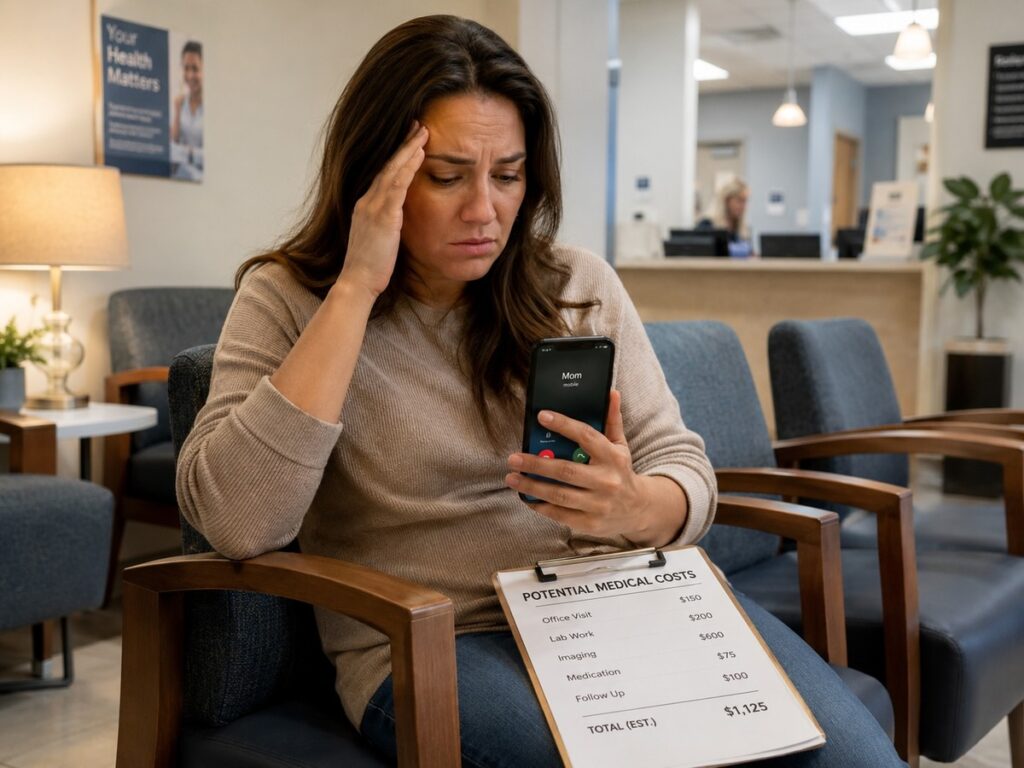 Unfortunately, it’s common for American adults to forgo care due to cost. In fact, 26% of US adults reported skipping some form of care because they couldn’t afford it. That number includes 15% who skipped a doctor/specialist visit, 10% who skipped a follow-up visit, and 9% who skipped a prescription.
While the initial expense is temporarily avoided, the unfortunate reality is that it catches up. In fact, research from 2026 suggests those numbers are growing, with 36% of adults citing cost as the reason they skipped care, and 18% reporting that their health worsened as a result. And that same study revealed that for those without health insurance, the number spikes to 75% who either delay seeking care or forgo it.
As many of these patients will sadly learn, delaying cost and care doesn’t work. In fact, when symptoms are ignored, patients and their care teams lose the opportunity to address smaller concerns before they become more difficult and more expensive to treat.
For some major health care concerns, such as blood pressure, blood sugar, thyroid changes, fatigue, pain, and hormone concerns, symptoms typically develop slowly.
Further, because they may appear in different ways, it often takes time to put the pieces together and arrive at the right answers. Regular and preventive care means both the patient and the doctor can catch patterns and identify trends in lab reports, and stage the necessary interventions before there’s a serious problem.
For folks managing chronic conditions, delayed care can be even more costly as these conditions often need ongoing monitoring to understand and notice small changes. What seems small at first can be a canary in a coal mine. In other words, what could be a routine visit or follow-up appointment may instead become a far more costly urgent care or emergency room visit, which often involve even more out-of-pocket costs to patients.
That initial visit, however, isn’t the only potential cost. Delayed care may also lead to longer-lasting symptoms, slower-acting treatments, and more frequent follow-up visits. All of that adds up.
And that’s just the financial cost. Those extended symptoms and longer treatments often also mean more stress for patients as they worry about their health. Stress can make many situations worse. But, more importantly, what research we do have about delays in healthcare, in this case related to insurance delays, is that they often lead to worsening conditions, preventable hospitalizations and prolonged stays, and increased rates of ongoing or chronic conditions.
While not every symptom is an emergency or will develop into one, seeking healthcare support when you’re not feeling well, experiencing changes in your health, or simply concerned about your health is often a way to save on healthcare costs. Waiting for emergencies is expensive and leaves little time to make lifestyle adjustments, ask questions, or take proactive steps to improve overall health.
The ER is Emergency Care, Not a Healthcare Plan
If you’ve been to an ER recently, you may have witnessed a troubling phenomenon: the ER being treated as primary care.
The emergency room is an absolutely vital part of the healthcare system, especially for situations where people are having chest pain, trouble breathing, signs of a stroke, heavy bleeding, or any number of serious and life-threatening situations. It’s not designed for primary care.
While the ER can save your life, it’s not intended to be your first line of defense. That’s your primary care physician, who not only knows your history and healthcare trends but also understands your healthcare goals and helps you make decisions to achieve them.
 Healthcare Costs: Primary Care with Insurance vs Direct Pay Healthcare
If we stay focused on the financial side for a moment, healthcare costs often feel very confusing because health insurance doesn’t make it easy (or in some cases affordable). While insurance may cover some costs, there are sometimes copays, deductibles, out-of-network costs, uncovered tests, prescription costs, and in some cases, partial coverage for what a doctor recommends.
But what’s the alternative?
Some healthcare providers offer direct-pay healthcare, where instead of billing insurance for every visit, patients pay the doctor(s) directly. Some clinics, like Canby Clinic, offer a healthcare membership model, which means patients can predict costs and access. With clearer pricing, there are no questions about whether you can afford a visit or whether the call to the doctor is “worth it.”
The membership model works similarly to a gym membership. Patients pay a monthly fee for the clinic’s services. There is typically no added cost for office visits, physical exams, or acute visits. Patients are able to get in quickly, typically within 24 hours (work week hours) to see a doctor, and they follow up regularly with a doctor who knows their history and can personalize a treatment plan.
When it comes to primary or preventative care, this is immensely helpful. It takes the guessing game out of costs. Predictable costs (or membership) mean patients can make the appointments they need, ask questions, follow up on care, and stay actively engaged in both preventive and proactive care. This kind of consistency is invaluable in primary care where every appointment, every conversation, and every lab can be used to create a complete picture.
Doctors and patients can monitor health trends, discuss lifestyle choices and their role in a patient’s health, and catch changes or concerns before they become more serious or costly.
Direct pay doesn’t replace health insurance. For many, health insurance is still needed for catastrophic care, including emergencies, extended hospital stays, surgeries, and other major medical events. But for preventative care, which can help stave off emergencies and avoid unnecessary healthcare scares, healthcare memberships and direct pay models can make routine care and ongoing support more accessible, personal, and easier to schedule, stress-free, or at least reduced.
How a Healthcare Membership Can Lower Healthcare Costs and Make Proactive Care Easier
Let’s dig into this a bit more deeply. Healthcare memberships are a direct-pay model that makes standard visits a bit more predictable in terms of cost. Instead of waiting for an emergency, patients pay a membership fee that provides easier access to regular healthcare visits (office visits are often included) and covers some routine healthcare treatments and needs.
For example, at Canby Clinic, “Members pay no deductibles, no copays, and no coinsurance, and most of the primary care services offered are included in your membership.”
It’s important to clarify that direct pay and healthcare membership models are not health insurance. They do not often cover emergency care, surgery, specialists, or other urgent needs. However, they often cover preventive care, ongoing health support, and primary care. That these are included often makes healthcare feel simpler, more transparent, and more accessible.
Further, a healthcare membership can help lower healthcare costs by:
- Keeping costs predictable: Patients know what costs are, up front, instead of worrying about surprise costs when the bill arrives.
- Encouraging preventative, proactive, and routine appointments: Increased accessibility means patients are more likely to schedule appointments and raise concerns (this is even more true in naturopathic clinics, where appointments are longer and offer more time to talk with providers).
- Reduces reliance on urgent care: When patients know their doctor is available and easy to reach (and they can speak to a human), they’re far more likely to schedule the kinds of appointments that prevent emergencies.
- Improved follow-up care: When you can realistically and consistently track health trends, it’s easier to follow up with questions about symptoms and lifestyle, as well as to schedule additional testing or appointments.
- Fosters doctor-patient relationships: Because patients pay a predictable, transparent fee, conversations can stay focused on their health rather than the cost of care. Further, a doctor who knows your history and is tracking health trends is more likely to see patterns or ask the right questions, especially when visits aren’t rushed.
- Helps patients understand their health and health trajectory: A patient who knows what’s going on with their body can actively play a role in improving both their health and outcomes.
For many patients, healthcare memberships can remove the hesitation one might feel about making an appointment. Instead of “is this necessary?” or “Can I afford the visit?” patients can ask “What’s going on with my body? What’s it telling me? And what are the next steps?” They can then seek support in a far more streamlined way.
 When to Stop Waiting and Make an Appointment Without Worrying About Healthcare Costs
For many people who’ve been operating within the health insurance model, and in a world where healthcare is increasingly expensive, it can be hard to shift to scheduling routine appointments for proactive, preventive care. Hard, but not impossible and remarkably beneficial.
The truth is, it’s almost always better to err on the side of caution and care and make an appointment. Primary care works best when patients feel comfortable asking questions and bringing up concerns early. This means there’s time for conversation, education/discussion, tests and labs as needed, and a plan before the problem potentially grows.
That said, do not wait if you notice changes in energy, sleep, digestion, mood, pain, menstrual cycles, blood pressure, or appetite, or if a new symptom appears that is persistent or worsening.
A primary care provider and their support can make it much easier for you to stop guessing (and perhaps worrying) and start getting answers and support. This is where a direct pay or healthcare membership can be helpful because the cost is predictable (or included) and you know what to expect.
If you don’t have a provider who offers direct pay or a membership model, it may be time to explore. Having a primary care provider who not only offers this payment model but also focuses on preventive care, patient education, and long-term healthcare planning can put you at ease about your health.
Naturopathic primary care does exactly this. It focuses on your relationship with your doctor, providing time to discuss your health history and ongoing concerns, ask questions, and create a plan to meet your health goals.
Healthcare shouldn’t only be reactive. Its primary goal should be to solve a problem once something has gone wrong and to focus on promoting good health, fostering well-being, and maintaining it over time. Your relationship with your doctor, and with healthcare costs, can change that.
If you’re ready to explore naturopathic primary care and a direct-pay membership model, reach out to our team today to schedule a consultation. Our doctors are here to talk, to hear your needs and concerns, and to help you build a proactive health plan that helps you avoid costs, not care.